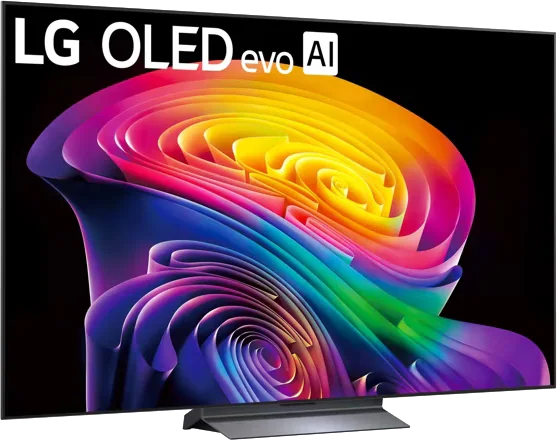
LG · 2026 · WOLED
C6 OLED evo
42 · 48 · 55 · 65 · 77 · 83″
From
$899.99
MOV
BRT
GME
Buying guide
A simple distance-to-screen rule, a lookup table for common sizes and the room factors that should nudge you up or down.
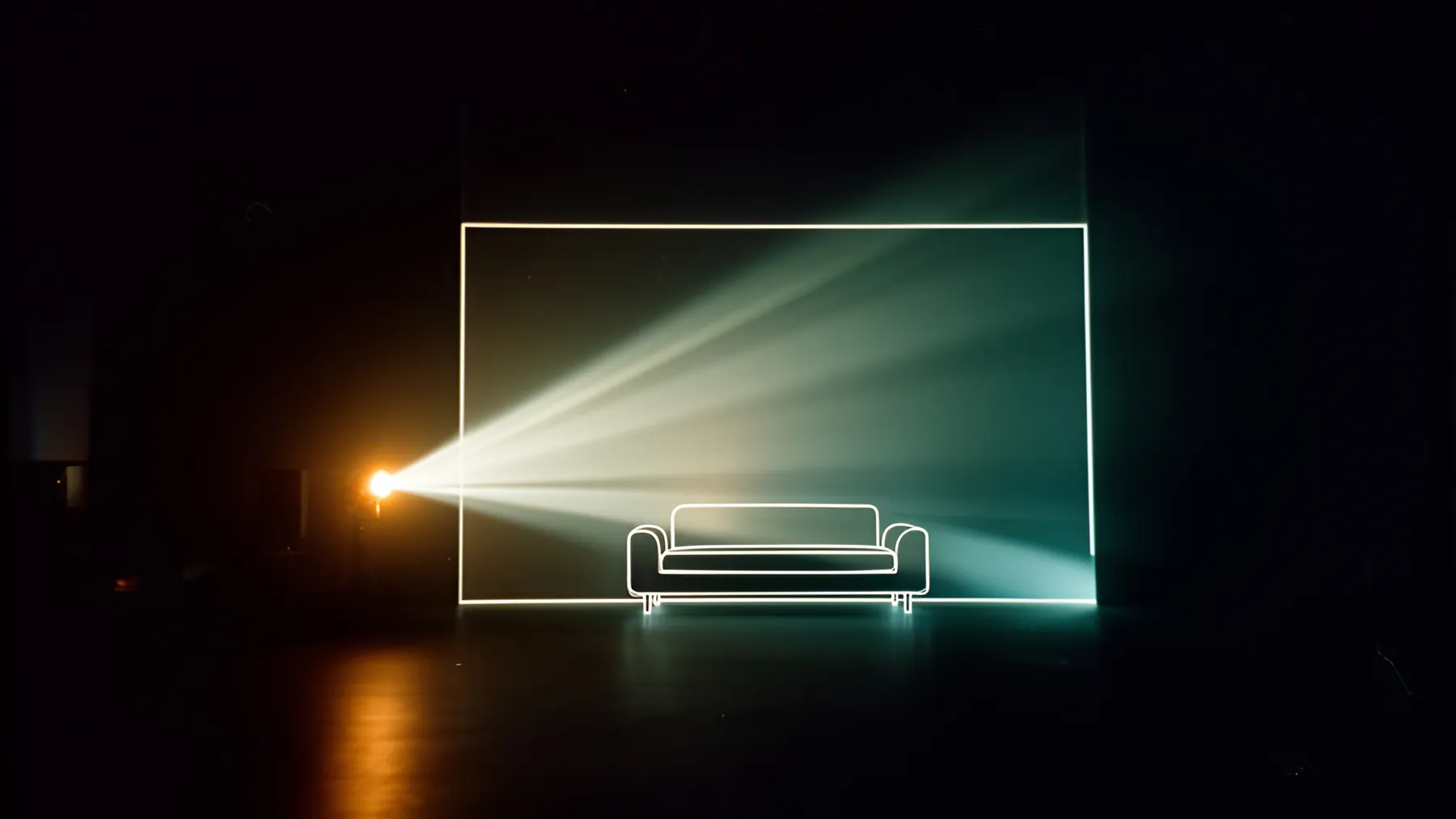
Choosing a TV size comes down to one question: how far will you sit from it? A screen that is too small loses the impact of movies and games. One that is too big for the room can make you scan from side to side. Fortunately there is a straightforward way to start.
TechRadar's TV size finder bases its recommendations on a ratio between your distance from the screen and the screen's diagonal size. For general viewing the ratio is 1.6 to 1, which means sitting 1.6 times the diagonal away. TechRadar says that at this ratio the screen takes up about 30 degrees of your vision, a figure it picked by drawing on guidance from several TV makers (Samsung, LG, Sony and Panasonic), the cinema-sound company THX, the SMPTE standards body and researchers at Cambridge.
There are two adjustments:
The diagonal is the corner-to-corner measurement, so a "65-inch" TV is 65 inches across the diagonal and noticeably less than that in width.
For example, if you sit 8 feet away, that is 96 inches. Divided by 1.6, the result is 60 inches, so a 55-inch or 65-inch TV bracket the answer.
| TV size | Cinematic (1.2x) | Standard (1.6x) | Relaxed (2x) |
|---|---|---|---|
| 43-inch | about 4.3 ft | about 5.7 ft | about 7.2 ft |
| 55-inch | about 5.5 ft | about 7.3 ft | about 9.2 ft |
| 65-inch | about 6.5 ft | about 8.7 ft | about 10.8 ft |
| 75-inch | about 7.5 ft | about 10 ft | about 12.5 ft |
| 85-inch | about 8.5 ft | about 11.3 ft | about 14.2 ft |
The figures come from applying TechRadar's three ratios to each diagonal size. Treat them as a starting point, not a requirement.
Wall and furniture. Measure the space, including the stand or mount, before you fall in love with a size. Bigger TVs are heavier. If you plan to wall mount a large set, follow the manufacturer's instructions for weight and fixings, and use a professional installer if you are unsure.
Seating spread. If several people sit off to the side, a larger screen helps everyone see, but viewing angles matter too. Our best TV for your room guide covers that.
What you watch. Movies and games reward a cinematic ratio. News, casual TV and a TV used as a background device are fine at standard or relaxed ratios.
Size and picture quality can be linked. Within a single model line, the sizes are not always identical. TechRadar reports that LG's 2026 C6 range has different panel tiers by size, and that the 42-inch and 48-inch sizes are less bright than larger ones because the pixels are packed more tightly. Check whether the size you want gets the picture quality you read about. See TV model numbers explained.
Budget and availability. Not every model is sold in every size. TechRadar's gaming guide lists, for example, 42, 48, 55 and 65 inches for the LG C6 and 50 to 85 inches for the TCL C6K, the UK name for the TCL QM6K. Use the finder to filter by size.
Good to know
Not at a typical sofa distance. With the 1.6 rule, a 65-inch TV suits a seat about 104 inches away, or just under 9 feet. At 1.2 times it suits roughly 6.5 feet.
No. The ratios are based on how much of your field of view the screen fills, so they depend on screen size and seating distance. They are a starting point, not a hard limit.
Ten feet is 120 inches. Divided by 1.6, that points to about a 75-inch screen. Divided by 1.2 for a cinematic feel, it points to 100 inches, and divided by 2 for a smaller picture, 60 inches.
Mentioned in this article
3 sources used for this article. We paraphrase and link, we do not republish.
More buying guide

Seven mistakes that show up again and again in reviews and buyer guidance, and a quick fix for each.

A step-by-step way to choose a TV you will still be happy with in several years, with the specs that matter and the ones that do not.

What makes a TV good for live games, and how to set it up so fast action stays sharp.
A short letter when something is worth your attention. Unsubscribe any time.