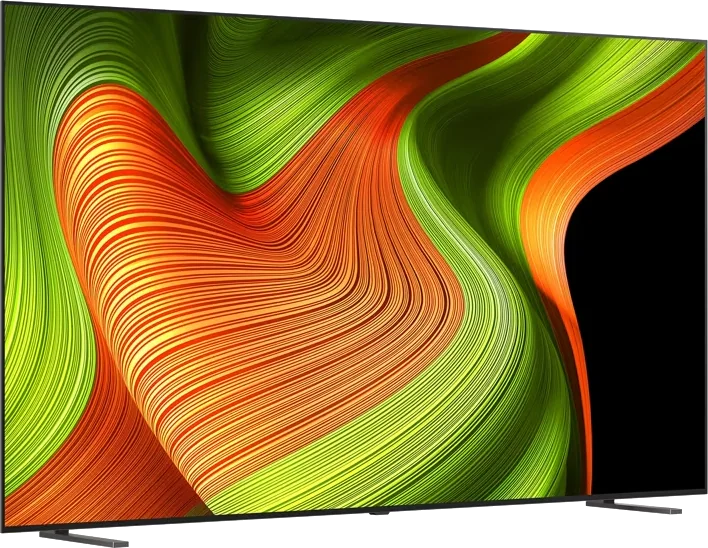
LG · 2025 · WOLED
B5 OLED
48 · 55 · 65 · 77 · 83″
List from
$1,400
MOV
BRT
GME
Buying guide
Match the panel type, brightness and screen finish to the room you will actually watch in.
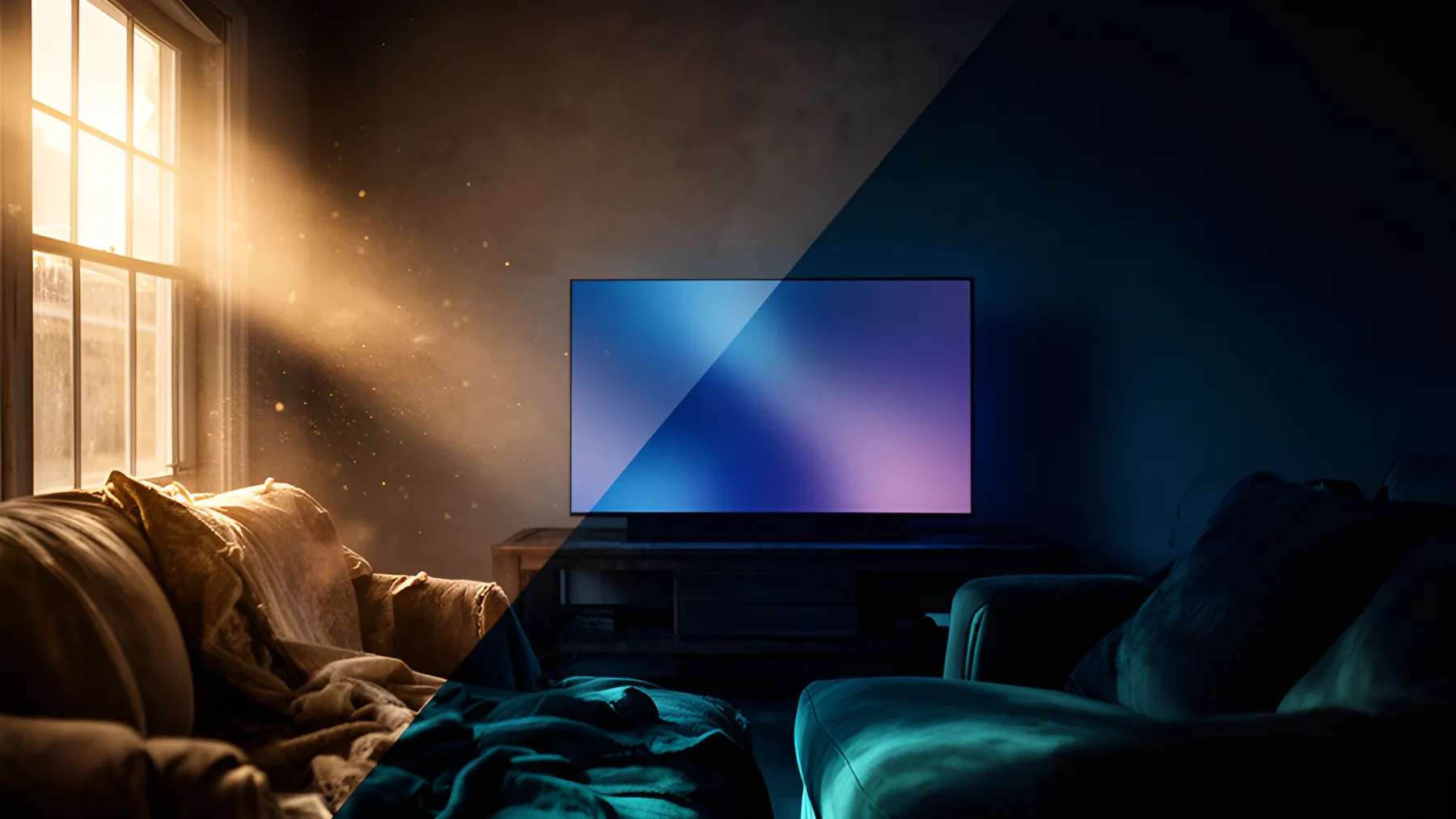
The best TV in a review is not always the best TV for your room. Light, seating and size change which technology works. Use this guide to match the room, then confirm with a model's specs.
Brightness matters for two reasons. TechRadar explains that a brighter picture competes better with lamps and daylight, so reflections are less distracting. Brightness also affects how bright scenes such as sports look.
Tom's Guide breaks OLED into three tiers. Entry-level OLEDs are generally the dimmest, and in a sun-soaked room your eyes will not be wowed. Flagships are the brightest, though their average full-screen brightness still trails comparable flagship LED TVs. Mid-range OLEDs such as the LG C6 are bright enough for everyday viewing as long as the room is not drenched in sunlight.
Two other routes help:
For more on what the numbers mean, read TV brightness and nits explained.
If most of your viewing happens at night or with the lights off, OLED is the strongest match. In TechRadar's head-to-head, the OLED delivered deeper, more consistent black tones in space scenes, while the Mini LED showed some blooming. The tester described OLED as the better choice for dark scenes and dark rooms, while also noting that some mini-LEDs now have much better backlight control.
The trade-off is that entry-level OLED can look dim next to a brighter set, so if you want strong highlights in HDR, step up to a mid-range or flagship model. Compare options in OLED vs. Mini LED.
Smaller rooms usually mean smaller screens, and size can change quality. LG told TechRadar that 65-inch and smaller TVs are common for bedrooms or secondary rooms. TechRadar also reports that the 42-inch and 48-inch versions of the LG C6 are less bright than other sizes of that line because of how tightly the pixels are packed. For a bedroom you often watch in the dark, that matters less, and the contrast benefit of OLED remains.
Choose a size from your seat distance with our size guide, and look at the LG B5 for an entry-level OLED option.
Viewing angle is how well the picture holds up when you sit off to the side. TechRadar's older explainer calls OLED's viewing angles unambiguously superior to LCD, including Mini LED, because LCD panels lose color control off-axis. Newer designs narrow the gap: in the Hisense UR8 comparison, the tester found the RGB set had better viewing angles and less backlight clouding than a standard Mini LED. TechRadar says QD-OLED maintains consistent quality across a wide range of seating positions.
Panel design varies, and Sony's Bravia 7 II is listed with average viewing angles in TechRadar's sports guide. If several people sit far to the side, read the viewing-angle section of a model's review. See RGB Mini LED explained.
| Room | Try first |
|---|---|
| Sunlit living room | Mini LED, or an OLED with an anti-glare finish |
| Mixed light, mostly evenings | Mid-range OLED |
| Dark home theater | OLED |
| Bedroom | Smaller OLED or Mini LED, check size-specific specs |
| Wide sofa | OLED or a model praised for viewing angles |
You can narrow by room and panel type in the finder.
Good to know
Not necessarily. Tom's Guide says mid-range OLEDs are bright enough for most living rooms as long as the room is not flooded with sunlight. Entry-level OLEDs are the dimmest, and glossy screens can show mirror-like reflections.
OLED is the usual pick because each pixel can turn fully off. TechRadar's head-to-head found the OLED handled dark scenes and black tones better than a mid-range Mini LED, which showed some blooming.
It can within a model line. TechRadar reports that LG's 2026 C6 line has different brightness tiers by size, with the smallest sizes less bright.
Mentioned in this article
LG · 2025 · WOLED
48 · 55 · 65 · 77 · 83″
List from
$1,400
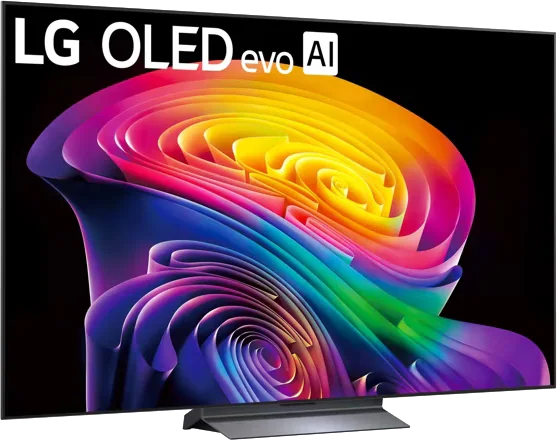
LG · 2026 · WOLED
42 · 48 · 55 · 65 · 77 · 83″
From
$899.99
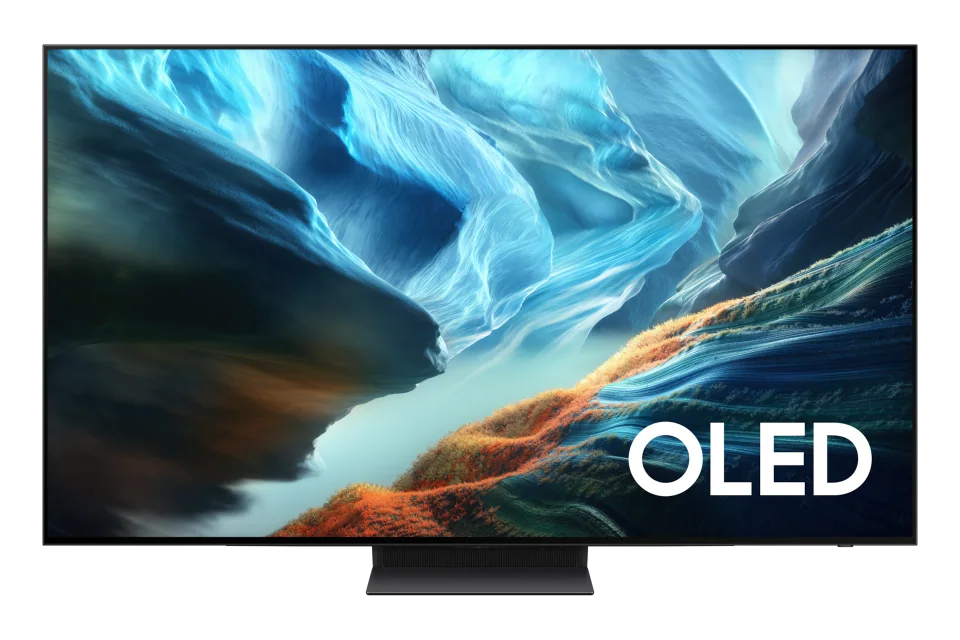
Samsung · 2026 · WOLED
42 · 48 · 55 · 65 · 77 · 83″
From
$899.99
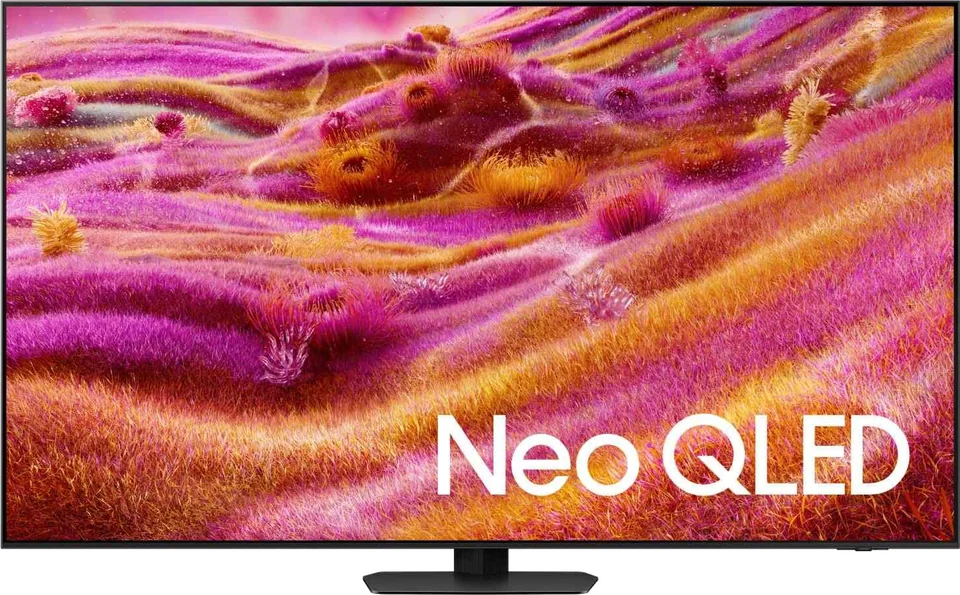
Samsung · 2025 · Mini LED
43 · 50 · 55 · 65 · 75 · 85 · 98″
From
$15,000
7 sources used for this article. We paraphrase and link, we do not republish.
More buying guide
A simple distance-to-screen rule, a lookup table for common sizes and the room factors that should nudge you up or down.

Seven mistakes that show up again and again in reviews and buyer guidance, and a quick fix for each.

A step-by-step way to choose a TV you will still be happy with in several years, with the specs that matter and the ones that do not.
A short letter when something is worth your attention. Unsubscribe any time.