Skip to content
TVReviews
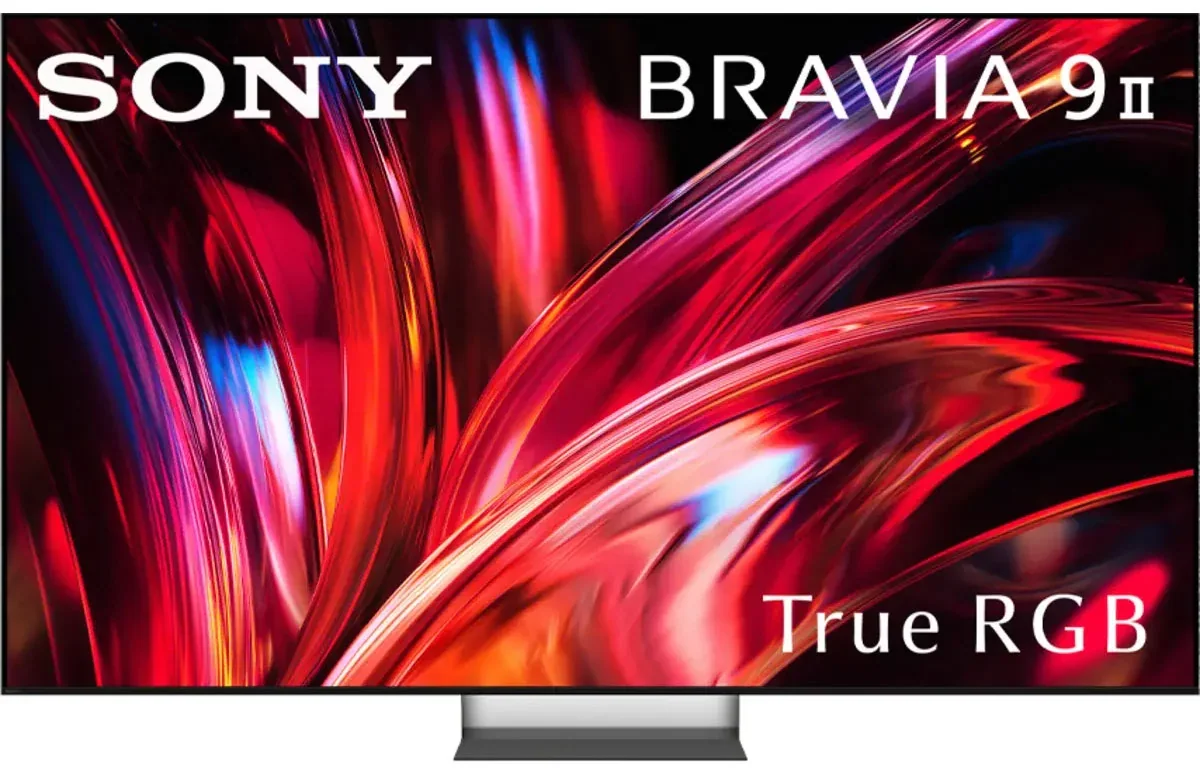
Sony BRAVIA 9 II True RGB, product photo

Sony · 2026 · RGB Mini LED

Sony BRAVIA 9 II True RGB

Sony's 2026 True RGB flagship: record-setting lab brightness and strong glare control, but only two HDMI 2.1 ports.

Choose a size

Exact model · United States

K65XR90M2

The size Tom's Guide, TechRadar and What Hi-Fi? tested. The 1,530 dimming zone count is What Hi-Fi?'s figure for this size.

Where to buy the 65″

List $3,600

Prices change. Each shows when it was last checked. We may earn a commission when you buy through these links; it never affects what we recommend. Amazon prices are not displayed.

Build a setup around this

The verdict

The best choice here for bright living rooms and HDR fans who want OLED-like contrast with far more brightness. Dark-room viewers who sit off to the side, and buyers on a tighter budget, may prefer the BRAVIA 8 II or an LG or Samsung OLED, which avoid the viewing-angle trade-off of an LCD panel.

The BRAVIA 9 II is Sony's top 2026 LCD TV, using a backlight of independently controlled red, green and blue LEDs that Sony calls True RGB. It is sold in 65, 75 and 85-inch sizes, with a 115-inch model also announced. Reviewers measured peak HDR brightness near 4,000 nits and praised its color, black levels and anti-reflective screen. Off-axis viewing and occasional local dimming slips keep OLED ahead for dark-room film fans.

Strengths

  • Extreme measured HDR brightness: Tom's Guide recorded 3,903 nits and TechRadar over 4,000 nits in its picture modes.
  • Reviewers describe OLED-like black levels with very little blooming, plus rich and accurate color.
  • Anti-reflective screen coating is among the most effective reviewers have seen, which suits bright rooms.
  • Input lag of 9.8ms, much better than the 17ms of the original BRAVIA 9, per Tom's Guide.
  • Dolby Vision, HDR10 and HLG are supported, with an ATSC 3.0 tuner in the US, and What Hi-Fi? calls the built-in sound big for a TV.

Weak spots

  • Only two of four HDMI inputs are full HDMI 2.1, a recurring complaint from Tom's Guide, TechRadar and What Hi-Fi?.
  • Off-axis viewing still loses contrast and shows some blooming, so OLED keeps the edge from the side.
  • What Hi-Fi? reports local dimming can be tripped up in difficult scenes and that OLED stays ahead on consistency.
  • Tom's Guide measured a color error of 3.65 out of the box in SDR, and TechRadar charted 5.3.
  • It is thick and heavy, and no HDR10+ support is listed.
  • Priced as an ultra-flagship, which TechRadar calls out as the main barrier.

Great for

  • Bright living rooms and daytime viewing
  • HDR fans who want maximum brightness with deep blacks
  • Large-screen buyers wanting 75 or 85 inches

Skip if

  • Dark-room cinephiles who sit off-axis
  • Multi-console gamers needing more HDMI 2.1 inputs
  • Budget-minded shoppers

How it fits

Calculated from published specs and independent tests. How this works

Tap a score to see what went into it. These are calculations, not lab results.

Claimed vs. measured

Independent test figures are kept apart from what the manufacturer says. Results vary by tester, test size and firmware.

Measured Claimed

Brightness

HDR peak brightness (10% window)The most-quoted HDR brightness figure. A 10% window is about the size of a bright object in a scene.

  • 4,180 nitsTechRadarHDR Cinema mode, peak · Oct 17, 2026
  • 4,416 nitsTechRadarHDR Filmmaker-like Professional mode, 10% window · Oct 17, 2026
  • 3,903 nitsTom's Guide65″ tested · 10% window, HDR, production unit out of the box · Aug 5, 2026

HDR full-screen brightnessBrightness of a completely bright image, like a snowfield or a hockey rink.

  • 974 nitsTechRadarFullscreen HDR, Cinema and Professional modes · Oct 17, 2026

SDR peak brightness (10% window)How bright regular, non-HDR content gets, which matters most in a sunny room.

  • 101 nitsTom's Guide65″ tested · 10% window, SDR · Aug 5, 2026

SDR full-screen brightnessFull-screen brightness for regular content. This is the number that fights daylight during sports and news.

  • 703 nitsTechRadarFullscreen SDR, Standard mode · Oct 17, 2026

Color

DCI-P3 color coverageHow much of the color range used by modern movies the TV can show.

  • 99.18%Tom's Guide65″ tested · UHDA-P3 coverage · Aug 5, 2026

Rec. 2020 color coverageA wider color target than DCI-P3. No consumer TV covers it fully.

  • 86.7%TechRadarBT.2020 coverage · Oct 17, 2026
  • 89.23%Tom's Guide65″ tested · Rec. 2020 coverage · Aug 5, 2026

Color accuracy out of the box (ΔE)Lower is better. Under about 3 is hard to distinguish from perfect by eye.

  • ΔE 5.3TechRadarSDR Delta-E, as charted in the review · Oct 17, 2026
  • ΔE 3.65Tom's Guide65″ tested · Out of the box, SDR · Aug 5, 2026

Gaming

Input lag, 4K 60 Hz (game mode)The delay between pressing a button and seeing it on screen.

  • 9.8 msTechRadarLeo Bodnar 4K tester, 4K 60Hz · Oct 17, 2026
  • 9.8 msTom's Guide65″ tested · Leo Bodnar 4K tester · Aug 5, 2026

What changes by size

The same name doesn’t always mean the same TV. Here is every size we’ve confirmed.

65″75″85″
Model numberK65XR90M2K75XR90M2K85XR90M2
Lowest price$3,598$4,598$6,498
Local dimming zones1,530Not publishedNot published
Width57.0″65.8″74.5″
Weight58.6 lb84.0 lb106.2 lb
VESA300×300300×300400×400

Highlighted rows differ between sizes.

Will it fit?

From your seat

Viewing distance8′0″

A good fit. At this distance a 65″ screen fills 33° of your view. Most people like 59″–80″ from here.

Seen from above

65″ screen8′0″fills 33° of your view

Dimensions and mounting

Without stand
57.0 × 32.6 × 1.7″
With stand
57.0 × 32.6 × 13.5″
Stand footprint
13.6″ between feet
Weight
58.6 lb (67.5 lb with stand)
VESA pattern
300 × 300 mm
Power use
Not published

Full specifications

From the manufacturer unless noted. Shown for the 65″ model.

Picture

Display technologyHow the screen makes its picture. OLED types light each pixel on their own for perfect black. Mini LED and QLED are LCDs with a backlight, and tend to get brighter.
RGB Mini LED
Panel notes
Sony calls the backlight True RGB LED: independently controlled red, green and blue LEDs rather than white LEDs. The LCD panel type is not stated on the pages read.
BacklightFull-array backlights sit behind the whole screen and allow local dimming. Edge-lit TVs are thinner but dim far less precisely.
RGB Mini LED full-array
Local dimming zonesHow many sections of the backlight can dim on their own. More zones usually means less glow around bright objects. Self-emissive OLED pixels do not need zones.
1,530source
Picture processor
XR Processor with AI
Screen finishAnti-glare and matte coatings cut reflections in bright rooms, sometimes at a small cost to perceived contrast.
Advanced anti-glare screen treatment (Abt listing)

HDR & color

HDR formatsHDR formats describe how a TV should show bright highlights and rich color. Dolby Vision and HDR10+ adjust the picture scene by scene; a source and TV must both support a format to use it.
HDR10, Dolby Vision, HLG, IMAX Enhanced
Wide color technology
True RGB LED backlight

Refresh & motion

Native refresh rateHow many new images per second the panel can really show. Marketing “motion rates” are often double this number, so check the native figure.
120 Hz
Maximum refresh rateThe highest refresh the TV accepts over HDMI. Sometimes only available at reduced resolution or from a PC.
120 Hz

Smart platform

Smart TV platformThe software your TV runs. It decides your home screen, app selection and how often you’ll see ads.
Google TV
Platform version
Google TV with Gemini
Voice assistants
Google Gemini, Amazon Alexa
Apple AirPlay
Yes
Google Cast
Yes
Broadcast tunerNeeded to watch free over-the-air TV with an antenna. ATSC 3.0 is the newer US standard; a few TVs have dropped tuners entirely.
ATSC 1.0, ATSC 3.0 (NextGen TV)source

HDMI & connections

HDMI ports
4
HDMI 2.1 portsPorts with enough bandwidth for 4K at 120 Hz and beyond. If you have more than one current console or a gaming PC, count these carefully.
2
HDMI notes
Two of four HDMI inputs are 48Gbps HDMI 2.1 (4K 120Hz, VRR, ALLM); the other two are HDMI 2.0, per What Hi-Fi? and Tom's Guide.source
eARCEnhanced Audio Return Channel sends high-quality audio from your TV’s apps and inputs back to a soundbar or receiver over one HDMI cable.
Yes
USB ports
2
Optical audio out
Yes
Ethernet
1 x Ethernet

Gaming

Variable refresh rateLets the TV match its refresh to a game’s frame rate, which removes tearing and most stutter.
HDMI Forum VRR
Auto Low Latency ModeSwitches the TV into game mode automatically when a console starts a game.
Yes
Highest 4K gaming refresh
120 Hz
Dolby Vision gaming
Yes

Built-in audio

Speaker configuration
Acoustic Multi-Audio Plus: 2 subwoofers, 2 full-range, 2 tweeters, 2 beam tweeters
Dolby Atmos
Yes
DTS supportMany TVs no longer decode DTS. If you play discs or a media server with DTS soundtracks, check here and on your soundbar or receiver.
DTS:X and DTS-HD Master Audio listed by Abt

Accessibility

Remote
RMF-TX940U

Warranty

Warranty
1 years
Warranty notes
1 year limited parts and 1 year limited labor, per the Abt listing.

Primary source: abt.com

Setup notes

  • Two HDMI inputs are 48Gbps HDMI 2.1; two are HDMI 2.0.
  • Supports 4K 120Hz, VRR, ALLM and Dolby Vision gaming.
  • TechRadar lists an ATSC 1.0 tuner while Tom's Guide says ATSC 3.0, so confirm tuner support if you rely on NextGen TV broadcasts.
  • The 85-inch uses a 400 x 400 mm VESA pattern; the 65 and 75-inch use 300 x 300 mm.
  • Table-top stand ships separately packed and needs assembly, per the Abt listing.

Video reviews

Each video was checked to exist and to be about the Sony BRAVIA 9 II True RGB.

Sony Bravia 9 II Review: I’ve Never Seen HDR Look This Good

Digital Trends

Digital Trends reviews the BRAVIA 9 II and focuses on its HDR performance, per the title.
My Sony BRAVIA 9 II Review Took 6 Weeks. Here's Why.

HDTVTest

HDTVTest explains in the title that its review took six weeks to complete.

Sony BRAVIA 9 II Review: Is This the Best HDR TV Ever Made?

AVForums

AVForums reviews the 9 II and asks whether it is the best HDR TV ever made.

Sony BRAVIA 9 Mark II Review - True RGB Is INCREDIBLE

Shannon Morse

Shannon Morse reviews the BRAVIA 9 Mark II and its True RGB backlight.

What reviewers found

Summaries in our own words. Follow the link to read each review in full.

  • Tom's Guide

    Kate Kozuch

    Aug 5, 2026

    Positive

    Tested a production 65-inch and measured very high HDR brightness, near-OLED blacks with almost no blooming and an effective anti-glare coating. Complaints are two HDMI 2.1 ports and weaker off-angle contrast than OLED; input lag improved sharply over the first BRAVIA 9.

    Read the original
  • TechRadar

    James Davidson

    Oct 17, 2026

    Positive

    Recommended review praising OLED-like contrast, strong color and a very high brightness reading, with good sound and gaming. Downsides are some blooming when viewed off-center, only two HDMI 2.1 ports and a price few will reach.

    Read the original
  • What Hi-Fi?

    Tom Parsons

    Jul 10, 2026

    Mixed

    Impressed by the 65-inch's brightness, color and a very effective matte screen for bright rooms, but did not give top marks. Local dimming can be tripped up in tricky scenes and OLED still leads on consistency and viewing angle.

    Read the original

Questions

What is True RGB on the BRAVIA 9 II?

It is Sony's name for a backlight of independently controlled red, green and blue LEDs instead of the usual white LEDs with a color filter. The aim is wider color and higher brightness, and reviewers measured both.

How bright is the BRAVIA 9 II?

Tom's Guide measured 3,903 nits at a 10% HDR window on a production 65-inch unit, and TechRadar reported 4,416 nits in Professional mode. Both figures are far above typical OLEDs.

Is the BRAVIA 9 II better than an OLED?

It is brighter and handles glare better, but What Hi-Fi? and Tom's Guide say OLED still wins on off-angle viewing and consistency. Tom's Guide recommends the BRAVIA 8 II OLED for most buyers over the 9 II.

What sizes and model numbers does it come in?

Abt lists the 65, 75 and 85-inch sizes as K65XR90M2, K75XR90M2 and K85XR90M2. Tom's Guide also prints a 115-inch K115XR90M2 and describes it as not yet available.
Also consider

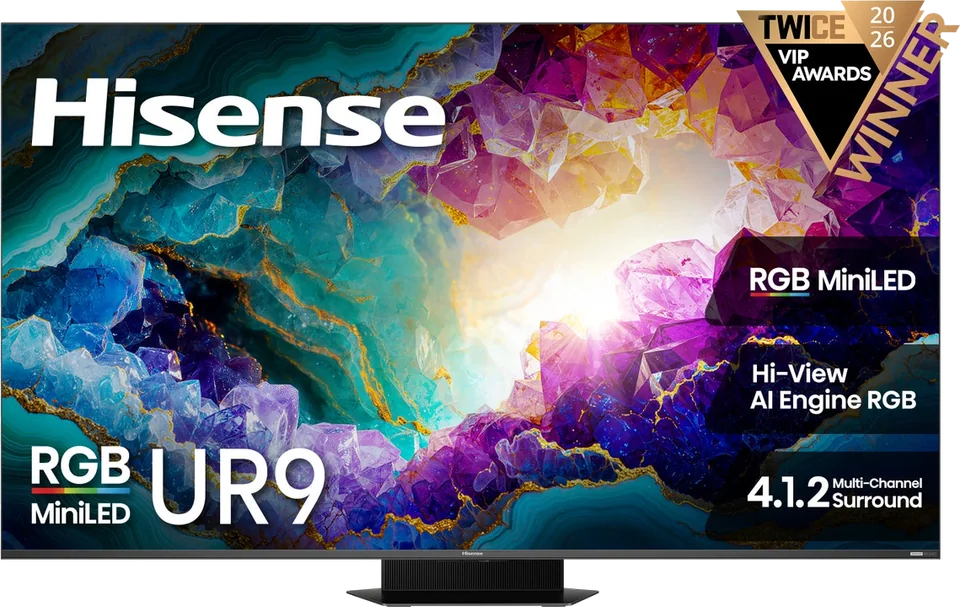
Hisense Hisense UR9 RGB Mini LED

Hisense · 2026 · RGB Mini LED

UR9 RGB Mini LED

65 · 75 · 85 · 100″

List from

$3,500
MOV
BRT
GME
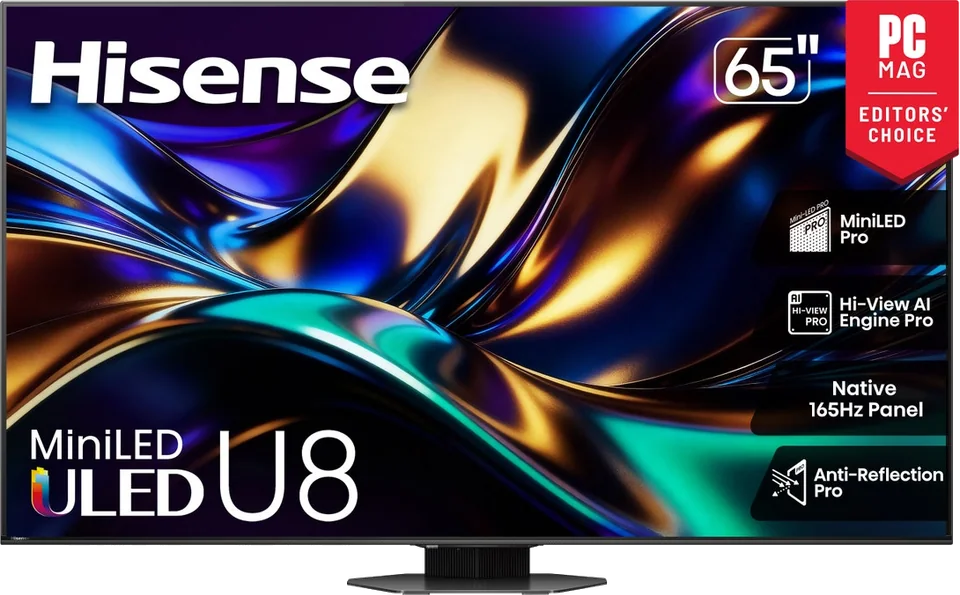
Hisense Hisense U8QG Mini LED

Hisense · 2025 · Mini LED

U8QG Mini LED

55 · 65 · 75 · 85 · 100″

Check retailers
MOV
BRT
GME
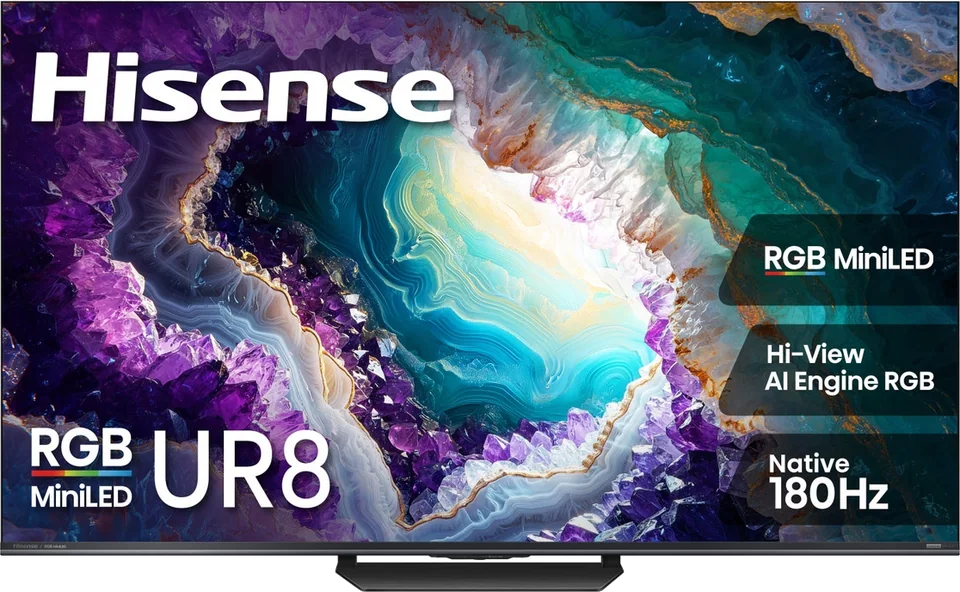
Hisense Hisense UR8 RGB Mini LED

Hisense · 2026 · RGB Mini LED

UR8 RGB Mini LED

55 · 65 · 75 · 85 · 100″

List from

$1,299
MOV
BRT
GME
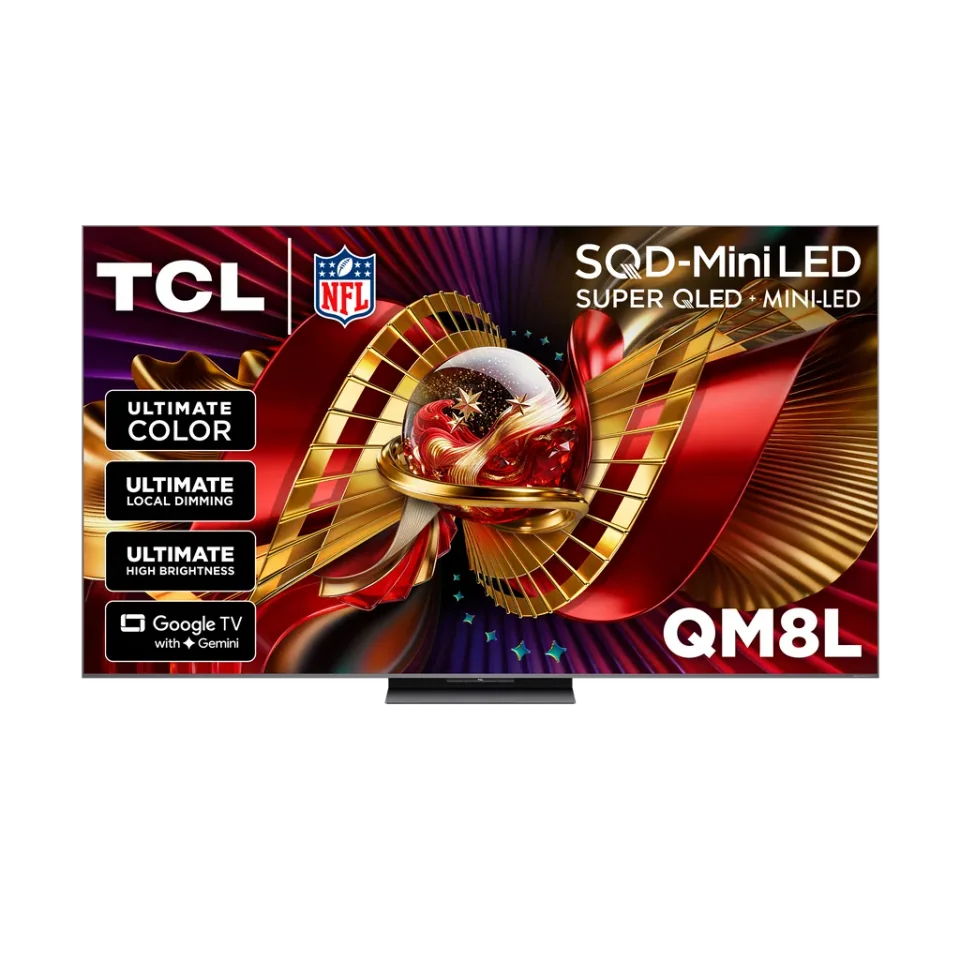
TCL TCL QM8L SQD-Mini LED

TCL · 2026 · Mini LED

QM8L SQD-Mini LED

65 · 75 · 85 · 98″

From

$999.99

MOV
BRT
GME
Sources for this page

Last reviewed Nov 9, 2026. Spotted an error? Tell us.

Where to buy the 65″from $3,598