Sony BRAVIA 7 II Review: What's the Catch With Sony's Cheaper RGB TV?
HDTVTest reviews the BRAVIA 7 II and asks what the catch is with Sony's cheaper RGB TV.
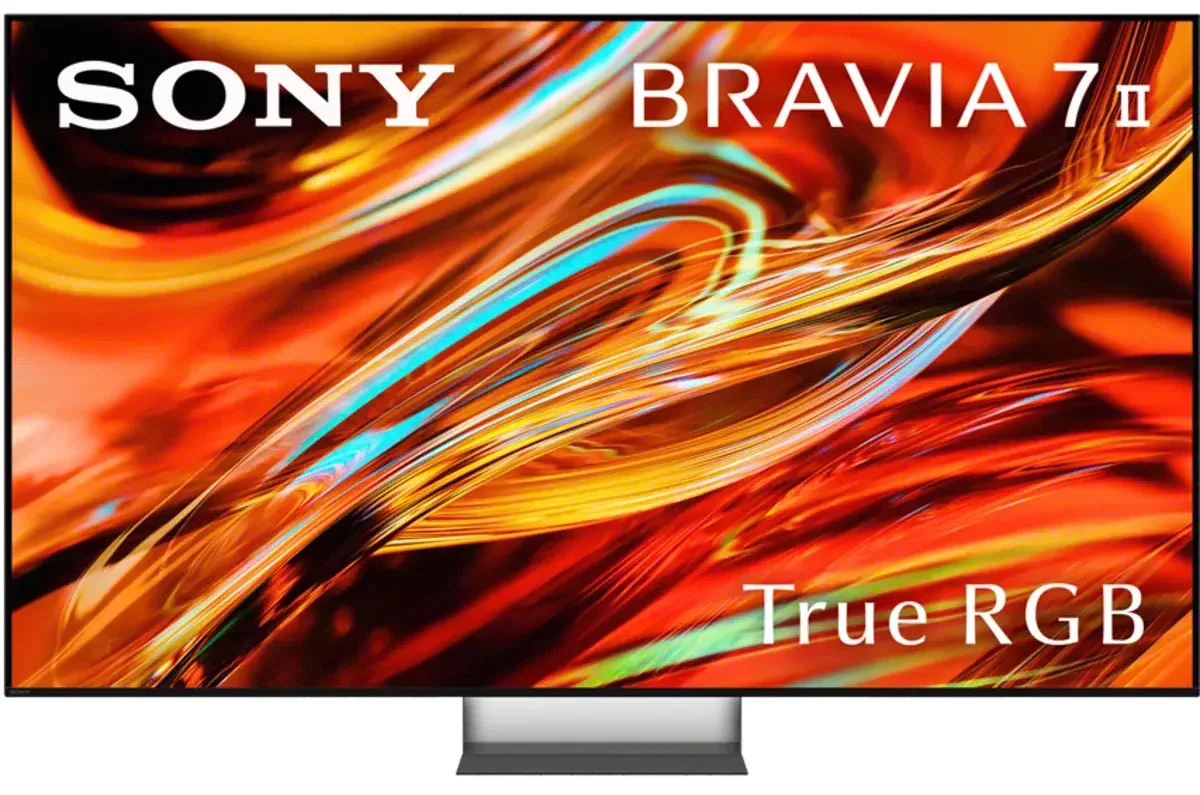
Sony · 2026 · RGB Mini LED
Sony's step-down True RGB LED TV: vivid color and strong HDR for the money, with a reflective screen and two HDMI 2.1 ports.
Choose a size
Exact model · United States
K65XR70M2
Dimming zone count for this size is not published in the sources read.
Where to buy the 65″
Also check
Prices change. Each shows when it was last checked. We may earn a commission when you buy through these links; it never affects what we recommend. Amazon prices are not displayed.
The verdict
A good pick for brighter rooms and mixed movie, sport and gaming use when an OLED is not a priority. Reviewers still lean toward a similarly priced OLED for dark-room contrast, and the 7 II's glossier screen and narrow sweet spot make the BRAVIA 9 II or an OLED a better fit for glare-heavy or wide seating areas.
The BRAVIA 7 II is the cheaper sibling of the BRAVIA 9 II, using the same True RGB idea of separate red, green and blue LEDs behind an LCD panel. Abt lists 50, 55, 65, 75, 85 and 98-inch sizes. Reviewers measured peak HDR brightness above 2,000 nits in some modes and praised color and gaming response. They also noted fewer dimming zones than the 9 II, a more reflective screen and average viewing angles.
Strengths
Weak spots
Great for
Skip if
Calculated from published specs and independent tests. How this works
Tap a score to see what went into it. These are calculations, not lab results.
Independent test figures are kept apart from what the manufacturer says. Results vary by tester, test size and firmware.
Brightness
HDR peak brightness (10% window)The most-quoted HDR brightness figure. A 10% window is about the size of a bright object in a scene.
HDR full-screen brightnessBrightness of a completely bright image, like a snowfield or a hockey rink.
SDR peak brightness (10% window)How bright regular, non-HDR content gets, which matters most in a sunny room.
Color
DCI-P3 color coverageHow much of the color range used by modern movies the TV can show.
Rec. 2020 color coverageA wider color target than DCI-P3. No consumer TV covers it fully.
Color accuracy out of the box (ΔE)Lower is better. Under about 3 is hard to distinguish from perfect by eye.
Gaming
Input lag, 4K 60 Hz (game mode)The delay between pressing a button and seeing it on screen.
The same name doesn’t always mean the same TV. Here is every size we’ve confirmed.
| 55″ | 65″ | 75″ | |
|---|---|---|---|
| Model number | K55XR70M2 | K65XR70M2 | K75XR70M2 |
| Lowest price | $1,398 | $1,598 | $2,298 |
| Local dimming zones | 340 | Not published | Not published |
| Width | 48.4″ | 57.0″ | 65.9″ |
| Weight | 40.6 lb | 58.6 lb | 80.7 lb |
| VESA | 300×300 | 300×300 | 300×300 |
Highlighted rows differ between sizes.
From your seat
A good fit. At this distance a 65″ screen fills 33° of your view. Most people like 59″–80″ from here.
Seen from above
Dimensions and mounting
From the manufacturer unless noted. Shown for the 65″ model.
Picture
HDR & color
Refresh & motion
Smart platform
HDMI & connections
Gaming
Built-in audio
Accessibility
Warranty
Primary source: abt.com
Each video was checked to exist and to be about the Sony BRAVIA 7 II True RGB.
HDTVTest reviews the BRAVIA 7 II and asks what the catch is with Sony's cheaper RGB TV.
Max M Chambliss II reviews the 7 II and presents it as the True RGB set most shoppers might buy.
Tech24 compares the 7 II True RGB with OLED in a review video.
CalebRated gives an in-depth review of the BRAVIA 7 II.
Summaries in our own words. Follow the link to read each review in full.
Recommended review that rates color and HDR highly and measured fast gaming response, but flags a reflective screen, average viewing angles and only two HDMI 2.1 ports. The reviewer would still choose an OLED at this price.
Read the originalCounted roughly 340 dimming zones in the 55-inch sample, fewer than rival backlit sets, and found it imperfect but capable. Praises its backlight performance yet judges it cannot match cheaper OLEDs at the price tested.
Read the originalImpressed by brightness, with 2,101 nits measured on the 55-inch, and by blooming control that approaches OLED. Notes a heavy build, limited viewing angle, no HDR10+ and built-in sound that is better than average.
Read the originalBoth use True RGB backlighting, but the 9 II adds far more dimming zones, much higher peak brightness and a more effective anti-glare screen. The 7 II is cheaper and comes in smaller sizes, including 50 and 55 inches.
Trusted Reviews measured 2,101 nits at a 10% window on the 55-inch in Professional mode, and Tom's Guide measured 2,077 nits. TechRadar measured lower figures of 1,114 and 1,295 nits in Filmmaker and Standard modes.
Two. What Hi-Fi? says HDMI 3 and 4 handle 4K 120Hz and VRR, while the other two inputs are HDMI 2.0.
Abt lists K55XR70M2, K65XR70M2 and K75XR70M2. Abt also shows 50, 85 and 98-inch sizes, but their model numbers were not printed on a page read for this entry.
Samsung · 2026 · RGB Mini LED
65 · 75 · 85″
From
$2,500

LG · 2024 · WOLED
42 · 48 · 55 · 65 · 77 · 83″
Check retailers
LG · 2025 · WOLED
42 · 48 · 55 · 65 · 77 · 83″
From
$1,500
Hisense · 2026 · Mini LED
55 · 65 · 75 · 85 · 100″
List from
$849
Last reviewed Nov 9, 2026. Spotted an error? Tell us.