Skip to content
TVReviews
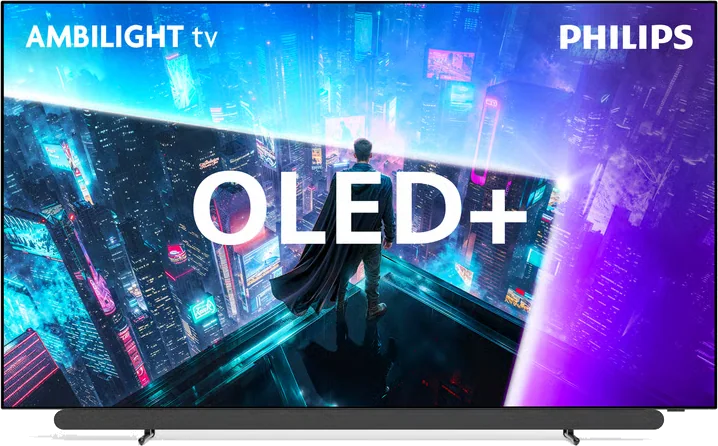
Philips OLED911, product photo

Philips · 2026 · WOLED

Philips OLED911

Philips' 2026 Ambilight OLED with a second-generation tandem panel, four HDMI 2.1 ports and Bowers & Wilkins sound, for the UK and Europe.

Choose a size

Exact model · United Kingdom

65OLED911/12

Uses the larger speaker bar, shared with the 77-inch, per What Hi-Fi. Philips UK also lists this size as 65OLED911/05. Sold in the UK and Europe, not the US. Philips UK prices are in pounds, so no price is recorded.

Where to buy the 65″

Check current prices at

Prices change. Each shows when it was last checked. We may earn a commission when you buy through these links; it never affects what we recommend. Amazon prices are not displayed.

Build a setup around this

The verdict

Early hands-on impressions describe a very bright, punchy picture and unusually strong built-in sound, and four HDMI 2.1 ports fix the OLED910's biggest weakness for gamers. With no independent lab measurements published yet, treat Philips' 4,500-nit claim cautiously and look for full reviews before buying. Buyers attached to Google TV or a broad app catalogue should note the switch to Titan OS.

The OLED911 is Philips' 2026 Bowers & Wilkins OLED, sold in the UK and Europe but not in the US, where Philips-branded TVs are a separate line from another company. It replaces the OLED910 with a second-generation Primary RGB Tandem WOLED panel, four full-speed HDMI 2.1 ports, four-sided Ambilight and a move from Google TV to Titan OS. It reached European retailers in autumn 2026, and coverage so far comes from hands-on previews rather than full lab reviews, so its real-world brightness is unverified.

Strengths

  • All four HDMI ports are full-bandwidth HDMI 2.1 with 4K 165Hz, VRR and ALLM, the first time Philips has offered that on its OLEDs, per T3.
  • Four-sided Ambilight plus AmbiScape, which syncs with Philips Hue, Nanoleaf and IKEA smart bulbs.
  • Second-generation Primary RGB Tandem WOLED panel, the same panel type as Philips' top OLED951.
  • Redesigned 3.1-channel Bowers & Wilkins sound system rated at 81W, with a separate subwoofer connection.
  • Set to be among the first OLED TVs with Dolby Vision 2 Max support, delivered by firmware update.
  • What Hi-Fi's hands-on describes a very bright, vivid picture and spacious, well-placed sound.

Weak spots

  • No independent lab measurements have been published yet, so Philips' 4,500-nit claim is unverified.
  • What Hi-Fi saw some banding on streamed content during its hands-on demo.
  • Moves from Google TV to Titan OS, and HDTVTest doubts it will match Google's app catalogue.
  • Dolby Vision 2 Max arrives only through a later firmware update.

Great for

  • UK and European buyers wanting a flagship-class OLED with excellent built-in sound
  • Gamers who need four HDMI 2.1 inputs
  • Ambilight fans who want smart-bulb syncing

Skip if

  • Buyers in the US, where it is not sold
  • Anyone wanting proven lab data before buying

How it fits

Calculated from published specs and independent tests. How this works

Tap a score to see what went into it. These are calculations, not lab results.

Claimed vs. measured

Independent test figures are kept apart from what the manufacturer says. Results vary by tester, test size and firmware.

Measured Claimed

Brightness

HDR peak brightness (10% window)The most-quoted HDR brightness figure. A 10% window is about the size of a bright object in a scene.

What changes by size

The same name doesn’t always mean the same TV. Here is every size we’ve confirmed.

48″55″65″77″
Model number48OLED911/1255OLED911/1265OLED911/1277OLED911/12
Lowest price————
Width————
Weight————
VESA————

Will it fit?

From your seat

Viewing distance8′0″

A good fit. At this distance a 65″ screen fills 33° of your view. Most people like 59″–80″ from here.

Seen from above

65″ screen8′0″fills 33° of your view

Dimensions and mounting

Without stand
Not published
With stand
Not published
Stand footprint
Not published
Weight
Not published
VESA pattern
Not published
Power use
Not published

Full specifications

From the manufacturer unless noted. Shown for the 65″ model.

Picture

Display technologyHow the screen makes its picture. OLED types light each pixel on their own for perfect black. Mini LED and QLED are LCDs with a backlight, and tend to get brighter.
WOLED
Panel typeFor LCD TVs: VA panels have deeper black but narrower viewing angles; IPS/ADS panels hold up better from the side but look grayer in the dark.
OLED
Panel notes
Second-generation Primary RGB Tandem WOLED panel from LG Display, shared with the OLED951, per What Hi-Fi, HDTVTest and TechRadar. Philips' UK page calls it a Tandem WOLED OLED META panel.source
BacklightFull-array backlights sit behind the whole screen and allow local dimming. Edge-lit TVs are thinner but dim far less precisely.
Self-emissive
Resolution
4K
Picture processor
P5 AI Intelligent Engine (10th generation, single chip) on a MediaTek Pentonic 800 platformsource
Screen finishAnti-glare and matte coatings cut reflections in bright rooms, sometimes at a small cost to perceived contrast.
Philips claims more than 99% of on-screen reflections are countered, per What Hi-Fi

HDR & color

HDR formatsHDR formats describe how a TV should show bright highlights and rich color. Dolby Vision and HDR10+ adjust the picture scene by scene; a source and TV must both support a format to use it.
HDR10, HDR10+, Dolby Vision, HLG

Refresh & motion

Native refresh rateHow many new images per second the panel can really show. Marketing “motion rates” are often double this number, so check the native figure.
165 Hzsource
Maximum refresh rateThe highest refresh the TV accepts over HDMI. Sometimes only available at reduced resolution or from a PC.
165 Hz

Smart platform

Smart TV platformThe software your TV runs. It decides your home screen, app selection and how often you’ll see ads.
Titan OSsource

HDMI & connections

HDMI ports
4
HDMI 2.1 portsPorts with enough bandwidth for 4K at 120 Hz and beyond. If you have more than one current console or a gaming PC, count these carefully.
4
HDMI notes
All four HDMI ports are full-bandwidth HDMI 2.1 with 4K gaming up to 165Hz, VRR and ALLM, per What Hi-Fi and TechRadar. The coverage read does not say which port carries eARC.
Optical audio out
Yessource

Gaming

Variable refresh rateLets the TV match its refresh to a game’s frame rate, which removes tearing and most stutter.
HDMI Forum VRR
Auto Low Latency ModeSwitches the TV into game mode automatically when a console starts a game.
Yes
Highest 4K gaming refresh
165 Hz

Built-in audio

Speaker configuration
3.1 channel Bowers & Wilkins system with a 75mm subwoofer and four passive radiators
Speaker power
81 Wsource
Dolby Atmos
Yes

Primary source: whathifi.com

Setup notes

  • All four HDMI ports support 4K high-refresh gaming with VRR and ALLM, per What Hi-Fi.
  • An external subwoofer can be connected to the TV, per What Hi-Fi.
  • Runs Titan OS instead of Google TV; Philips said Apple TV would be added after launch, per What Hi-Fi.

Video reviews

Each video was checked to exist and to be about the Philips OLED911.

Philips OLED+911 in 48, 55, 65 and 77-inch first look

hxos plus

A first look at the OLED+911 across its four screen sizes.
Philips OLED911 4K UHD OLED+ Ambilight TV 2026!

Hot Tech

An overview video introducing the OLED911 as part of Philips' 2026 Ambilight TV range.

Philips OLED851 & OLED911: Welke OLED TV Moet Je Kiezen? | Expert

Expert Nederland

A Dutch retailer's explainer comparing the OLED851 and OLED911 to help buyers choose between them.

What reviewers found

Summaries in our own words. Follow the link to read each review in full.

  • What Hi-Fi?

    Date unknown

    Positive

    A pre-production hands-on that found the picture rich, punchy and bright and the 55-inch sound surprisingly spacious, while flagging some banding on streamed clips and stressing that full testing is still needed before a final verdict.

    Read the original
  • T3

    Mike Lowe

    Mar 30, 2026

    Positive

    A preview built around five standout features: classic four-sided Ambilight, a ten-driver Bowers & Wilkins speaker system, four HDMI 2.1 inputs, upcoming Dolby Vision 2 Max and the new operating system. The writer also reminds readers that the set is not sold in the USA.

    Read the original

Questions

Is the Philips OLED911 sold in the US?

No. What Hi-Fi says Philips does not sell this range in the US or Australia, and T3 adds that it is not available in the USA. Philips-branded TVs sold in the US come from a different company.

What changed from the OLED910?

The OLED911 moves to a second-generation Primary RGB Tandem panel, offers four HDMI 2.1 ports instead of two, supports up to 165Hz, and swaps Google TV for Titan OS. It is also slimmer and has a redesigned, pill-shaped Bowers & Wilkins speaker bar.

Does the OLED911 support Dolby Vision and HDR10+?

Yes. It supports HDR10, HLG, HDR10+ and Dolby Vision, and coverage says Dolby Vision 2 Max support is due to arrive through a firmware update.

How bright is the Philips OLED911?

Philips claims a peak brightness of 4,500 nits, but no independent lab measurements had been published when this was written. Early hands-on coverage describes the picture as very bright, and full reviews should show how the claim holds up.

Also consider

LG LG G6 OLED evo

LG · 2026 · WOLED

G6 OLED evo

55 · 65 · 77 · 83 · 97″

From

$1,900

MOV
BRT
GME
LG LG G5 OLED evo

LG · 2025 · WOLED

G5 OLED evo

55 · 65 · 77 · 83 · 97″

Check retailers
MOV
BRT
GME
Hisense Hisense U8QG Mini LED

Hisense · 2025 · Mini LED

U8QG Mini LED

55 · 65 · 75 · 85 · 100″

Check retailers
MOV
BRT
GME
Hisense Hisense UR9 RGB Mini LED

Hisense · 2026 · RGB Mini LED

UR9 RGB Mini LED

65 · 75 · 85 · 100″

List from

$3,500

MOV
BRT
GME
Sources for this page

Last reviewed Nov 9, 2026. Spotted an error? Tell us.