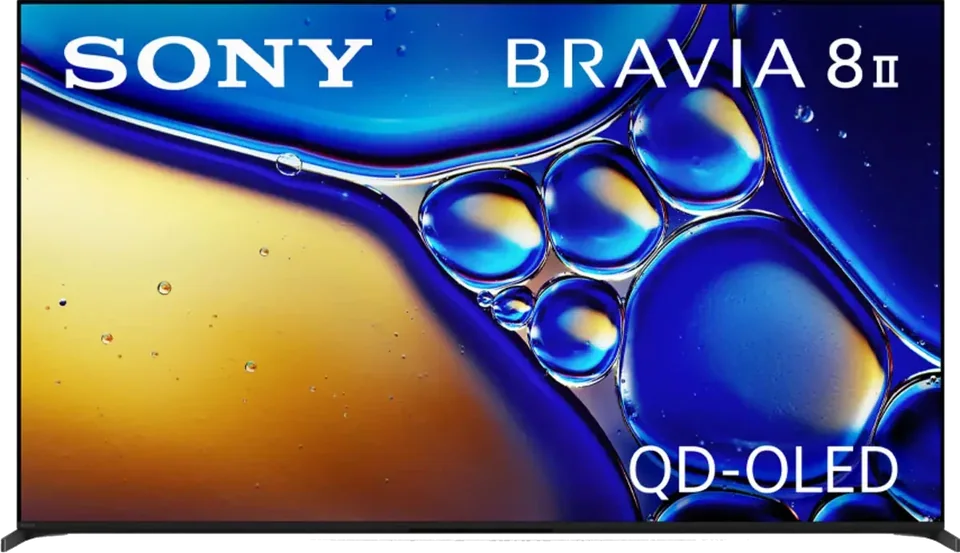
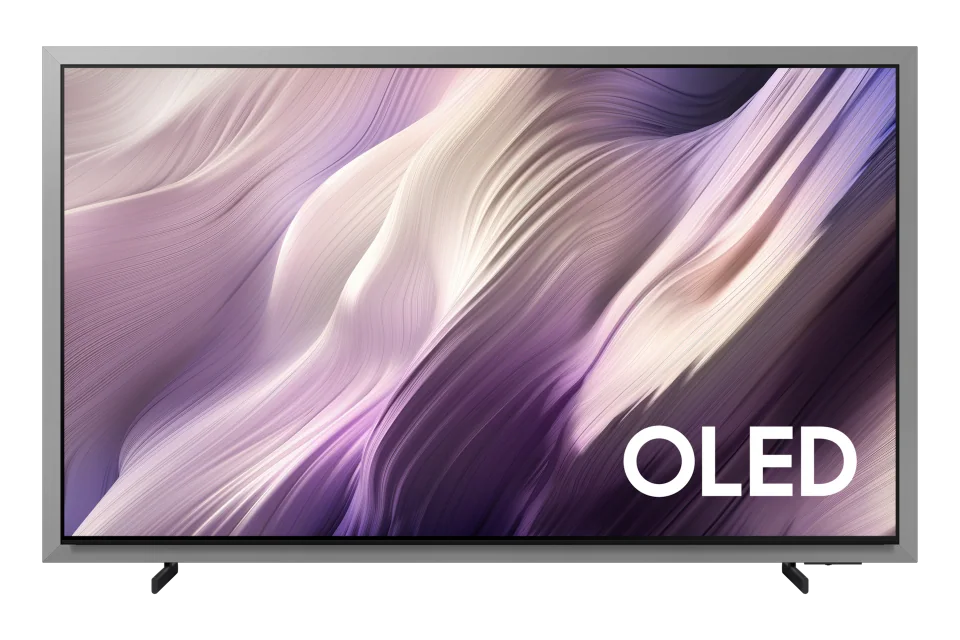
Sony BRAVIA 8 II vs Samsung S95H
Two QD-OLED panels with very different personalities.
These TVs share a display technology and take it in different directions, with one tuned for accuracy and processing and the other pushing brightness and glare handling.
The short version
- Samsung S95H OLED is measured about 106% brighter than Sony BRAVIA 8 II QD-OLED in a 10% HDR window (2,764 vs 1,342 nits).
- Samsung S95H OLED does not support Dolby Vision, a format used by many streaming services and 4K Blu-rays.
- Input lag differs by about 6.7 ms in testing. Either will feel responsive to most players.
- At these sizes, Samsung S95H OLED costs $198 less than Sony BRAVIA 8 II QD-OLED, based on prices last checked in our catalog.
Choose BRAVIA 8 II QD-OLED if…
- its smart platform, design or availability suits you better, since it doesn’t lead on any of the measured uses here
Choose S95H OLED if…
- you mostly watch movies, especially in a dim room
- your room is bright during the day
- you watch a lot of live sports
- you play on a current console or a gaming PC
- getting the most for your money matters most
Measured Claimed
Size & price
Screen size
65″
65″
Exact model
K-65XR80M2
QN65S95HAFXZA
Best current price
$2,498
$2,300
List price
$3,499
$3,400
Price per inch
$38
$35
Model year
2025
2026
Picture
Display technologyOLED types light each pixel on their own. Mini LED and QLED use a backlight, and tend to get brighter.
QD-OLED
QD-OLED
Panel typeVA panels have deeper black than IPS/ADS, which hold up better from the side.
OLED
OLED
HDR formats
HDR10, Dolby Vision, HLG, IMAX Enhanced
HDR10, HDR10+, HLG
HDR peak brightness (10% window)The most-quoted HDR brightness figure. A 10% window is about the size of a bright object in a scene.
1,342 nitsmeasured
2,764 nitsmeasured
HDR full-screen brightnessBrightness of a completely bright image, like a snowfield or a hockey rink.
232 nitsmeasured
455 nitsmeasured
SDR peak brightness (10% window)How bright regular, non-HDR content gets, which matters most in a sunny room.
270 nitsmeasured
253 nitsmeasured
DCI-P3 color coverageHow much of the color range used by modern movies the TV can show.
99.95%measured
99.92%measured
Color accuracy out of the box (ΔE)Lower is better. Under about 3 is hard to distinguish from perfect by eye.
ΔE 3.05measured
ΔE 2.24measured
Gaming
HDMI 2.1 portsNeeded for 4K at 120 Hz and above.
2
4
Highest 4K refresh
120 Hz
165 Hz
Variable refresh rate
HDMI Forum VRR
FreeSync Premium Pro, NVIDIA G-SYNC Compatible
Auto Low Latency Mode
Yes
Yes
Input lag, 4K 60 Hz (game mode)The delay between pressing a button and seeing it on screen.
16.33 msmeasured
9.6 msmeasured
Room suitability
Screen finish
Not published
Glare Free matte screen; Samsung cites a gloss level of 15 GU or less
Width (without stand)
56.9″
Not published
Weight (without stand)
50.5 lb
Not published
VESA pattern
300 × 300 mm
Not published
Features
Smart TV platform
Google TV
Tizen
Broadcast tuner
ATSC 1.0, ATSC 3.0 (NextGen TV), ClearQAM
ATSC 1.0
eARC
Yes
Yes
HDMI ports
4
4
AirPlay
Yes
Not published
Google Cast
Yes
Not published
Warranty
1 year
Not published
Fit scores
Movies
8.5 / 10
9.2 / 10
Bright room
1.8 / 10
5.4 / 10
Sports
7 / 10
7.7 / 10
Gaming
8.4 / 10
9.7 / 10
Value
4.5 / 10
7.1 / 10
Want to swap in a different TV? Open this in the full comparison tool.